For the Trade · 7 min
Before the After Photo: Marketing Jobs You Haven't Built Yet
Every contractor's marketing has the same bottleneck: you can only photograph what you've already built, and only when the light, the schedule, and the homeowner's tidiness cooperate. Renders break that dependency.
The portfolio gap problem
You want more high-end kitchen work, but your portfolio is the mid-range work that got you here. Every trade knows this trap: the jobs you show determine the jobs you're offered, and you can't show what you haven't been hired to build. Photography can't fix a chicken-and-egg problem.
Rendering can. A photorealistic render of the kitchen you want to be hired for — composed like editorial photography, materials at the tier you're targeting — is a legitimate portfolio piece when presented honestly: 'design visualization' or 'proposed project,' never passed off as a completed build. Clients don't punish the honesty; they respond to the capability it demonstrates.
Render the jobs that got away — and the ones mid-flight
Two free wins sit in your files right now. First, the beautiful jobs you built but never photographed properly — the kitchen that was done for two years before you thought to shoot it, now full of the client's clutter. Render it from the drawings and specs you still have; it becomes the hero image it always deserved to be.
Second, jobs currently under construction: post the render now, the progress shots along the way, and the finished photo at the end. That render-to-reality arc is the single most trust-building content sequence a contractor can publish — it proves your pictures come true.
Feed math for the trades
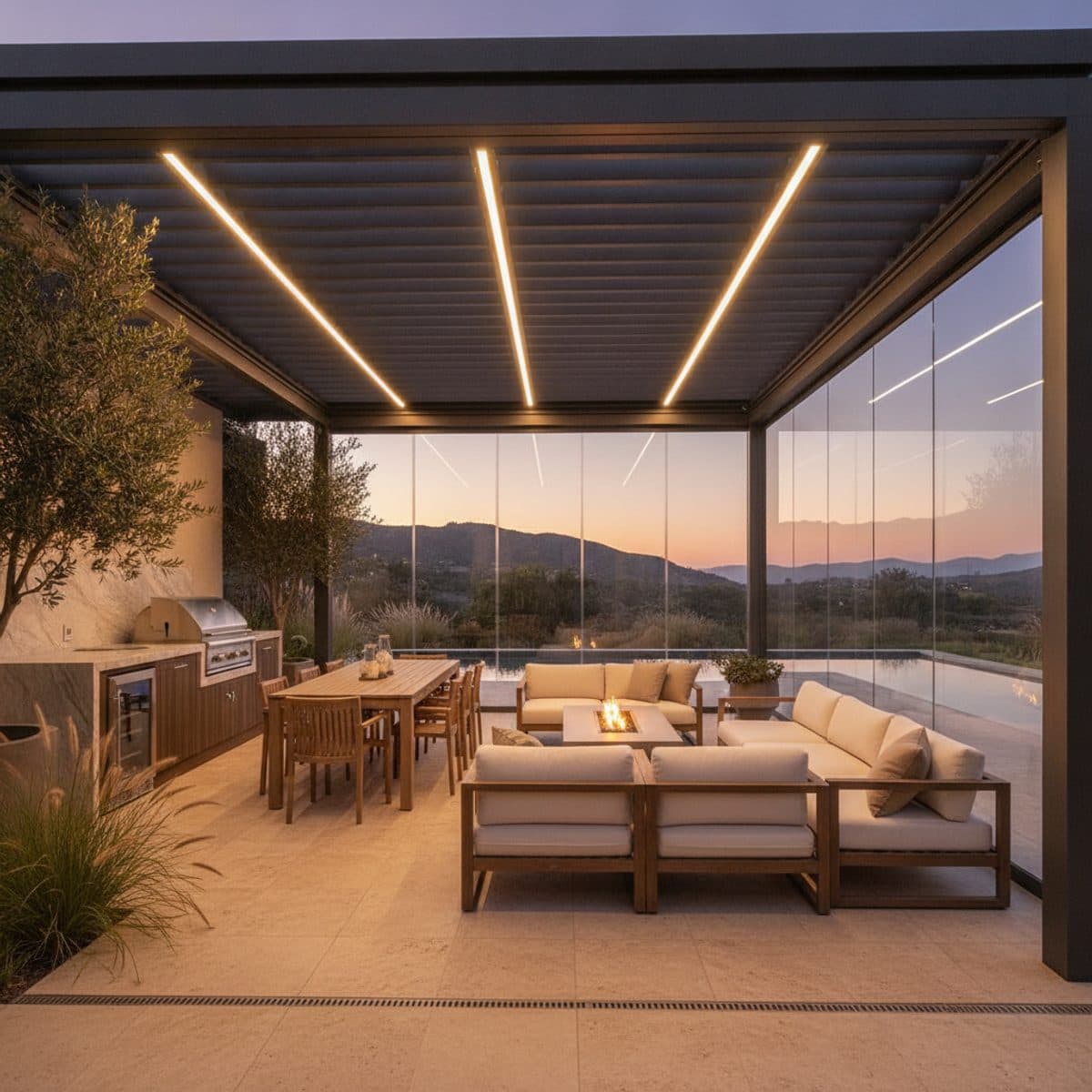
An Instagram presence needs a rhythm your job sites can't reliably supply. Renders decouple the calendar: a Single Room package yields three distinct views — three posts, or a post and two stories — from one $399 order. Dusk exteriors and lit outdoor rooms consistently out-engage daytime interiors; the algorithm likes warm light as much as clients do.
Caption with spec language, not adjectives. 'Louvered aluminum pergola, integrated 2700K LED, glass side panels' attracts homeowners who are actually shopping that project — and pre-qualifies the DMs you get.
Ads that show the buyer their own future
For paid traffic, generic stock reads as generic on sight — homeowners have seen every stock kitchen on the internet. A render styled to your market's actual housing stock (a Craftsman kitchen for a Pasadena audience, an ADU against a ranch house for San Diego) performs because it looks like the viewer's street. Regional specificity is the cheapest targeting you can buy, and it's built into the image itself.
Route the click somewhere that continues the picture: a service page with more renders and a flat price, not a generic contact form. The ad promised an image of their future; the landing page should keep that promise.
The honest-labeling rule
Label renders as renders — a small 'visualization' tag protects you and, counterintuitively, sells harder: it tells prospects you can show them their project before they commit, which is exactly the service anxiety-ridden remodel clients are hoping exists. The portfolio you need for the work you want is one order away from existing. Build it before the build.
Rendering Agency · Published 2026-07-14