For the Trade · 7 min
How to Present a Remodel Bid Clients Actually Sign
You priced the job right, scoped it tight, and lost to a contractor whose number was higher. The difference usually isn't the number — it's that their client could see the finished room and yours couldn't.
The bid is a document. The decision is a picture.
A remodel bid asks a homeowner to trade a six-figure sum for a stack of line items: demo, rough-in, drywall, allowances. Every line is real work, and none of it looks like anything. The client isn't equipped to imagine a finished kitchen from "cabinetry allowance: $28,000" — so they defer, compare numbers, and stall.
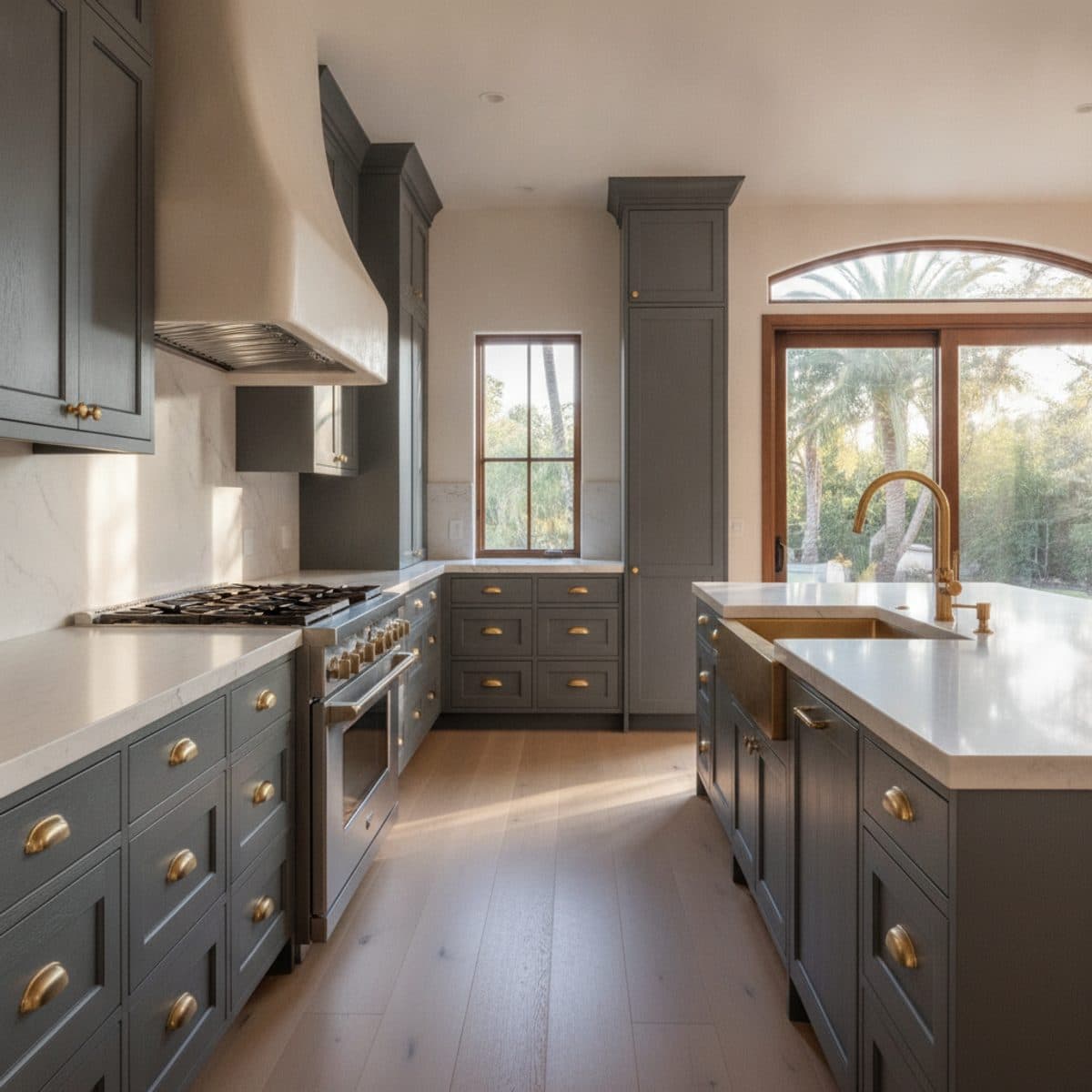
The contractors who close at higher prices all do a version of the same thing: they collapse the imagination gap. Sometimes it's a portfolio of similar jobs. Increasingly it's a photorealistic render of this job — the client's footprint, the client's finishes, the client's light. When the picture exists, the conversation changes from "can we trust the number" to "when can you start."
Structure the meeting around one image
Open with the render, not the spreadsheet. Put the finished room on the screen or on paper in front of them, full bleed, before any numbers appear. Let them react — clients almost always point at something specific: the island seating, the hood, the window over the sink. That pointing finger is engagement you can't buy with a lower bid.
Then walk the number as the cost of that picture. "The casework you're looking at is the $28,000 line. The counter you see is the Calacatta-look quartz at $9,400 installed." Every line item now has a face. Objections become specific and solvable — swap the counter material, simplify the island — instead of global and fatal.
Close with scope certainty, not urgency. "This render is what we build. If a finish changes, we re-render before we re-price." You've just converted the render from a sales picture into a scope contract — which is worth more.
What belongs in the packet
A signing-ready bid packet is four pieces. One: the render (or two views for larger scopes). Two: a one-page spec summary naming real products — cabinet line and door style, counter material, plumbing fixture finishes, tile with pattern names. Three: the price, structured as the packages you actually sell. Four: the schedule as a commitment — a delivery date tied to their decision date, not a vague duration.
Notice what's absent: fifteen pages of terms up front, allowance ranges wide enough to be meaningless, and any language that makes the project feel provisional. Terms belong in the contract that follows the yes.
Handle the comparison shopper directly
When a client is holding three bids, the render reframes the comparison. Their other bids describe a kitchen; yours shows one. Say it plainly: "You're comparing two descriptions and a photograph." Most homeowners have lived through a project that didn't match the description — the render is proof you close that gap professionally before demo, which implies you'll manage the job the same way.
The math works even on thin margins. A Single Room render package is a flat $399. If it moves one bid in ten from loss to close on a $60,000 job, it has paid for itself roughly fifteen times over.
The follow-up that doesn't chase
After the meeting, send the render itself — not a PDF of the whole packet — with one sentence: "This is the kitchen we'd build for you." Homeowners forward images to spouses, parents, and group chats; they do not forward spreadsheets. Your bid now circulates through the household as a picture of the finished room, doing your selling in rooms you're not in.
If the decision drags, resist discounting. Offer a second camera angle or an option set (two island colors, one render each) instead. It keeps the conversation inside the picture — where you're winning — rather than inside the number, where everyone loses together.
Rendering Agency · Published 2026-07-14